🌵 Parodia Cactus Care Guide
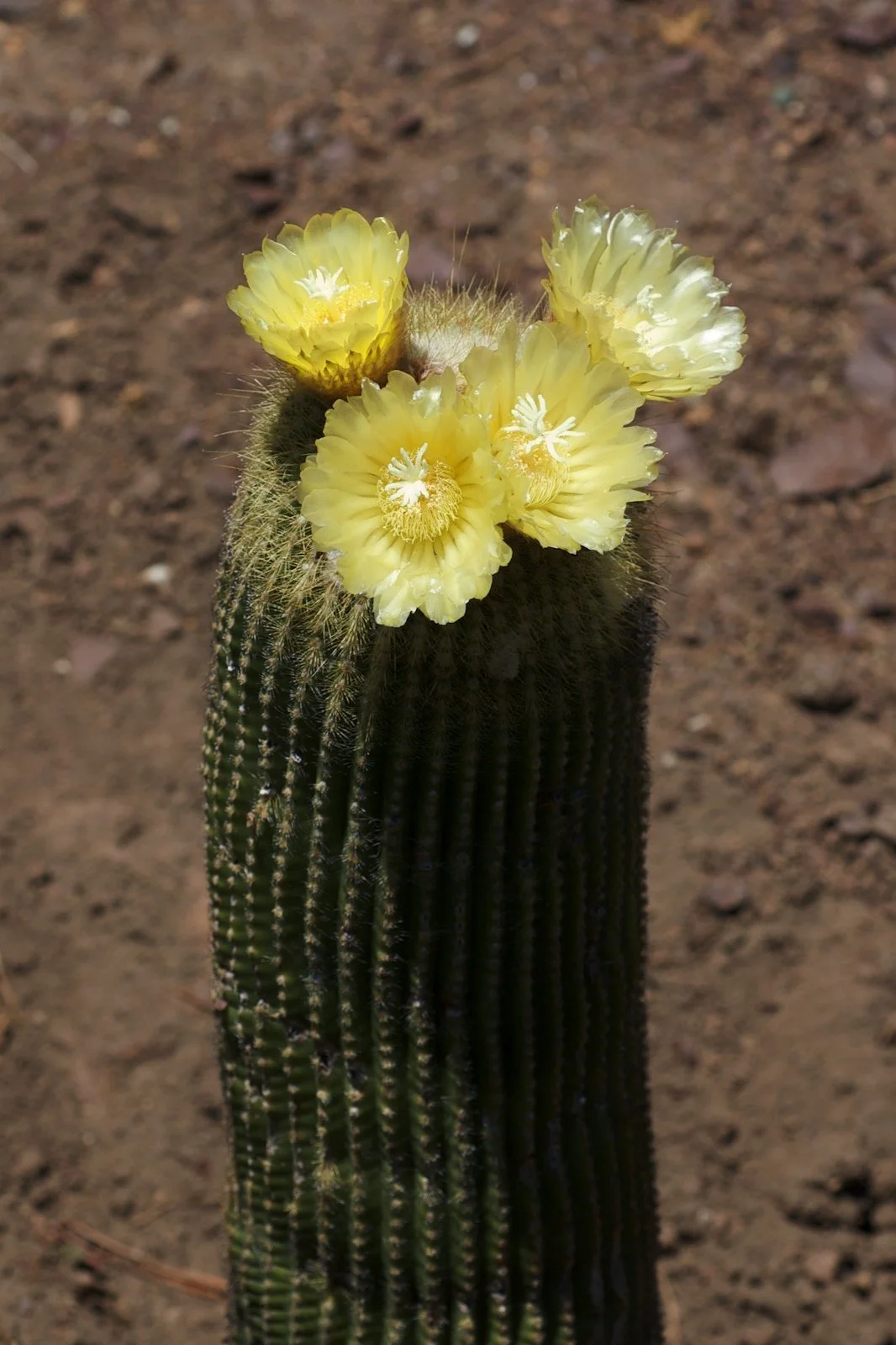
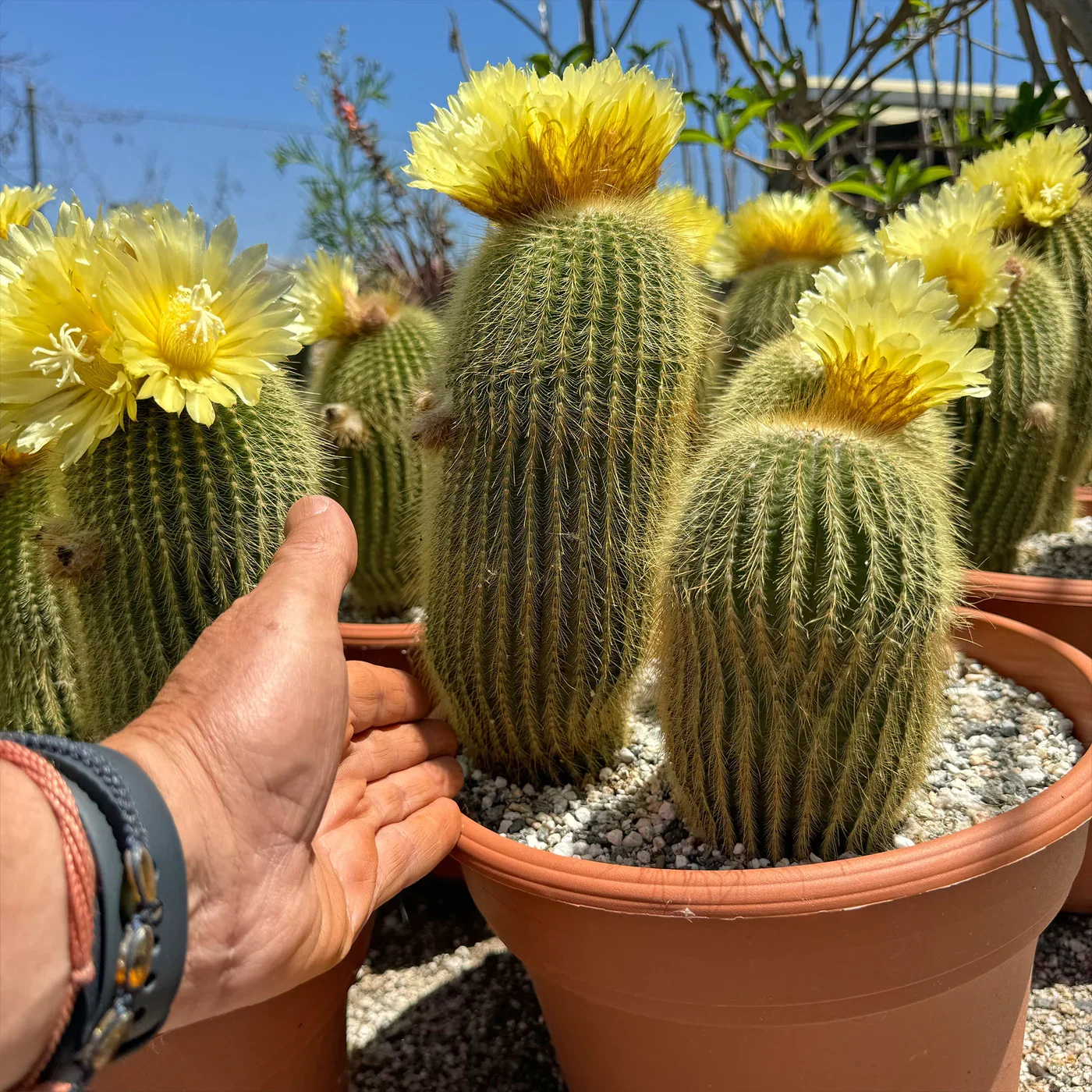
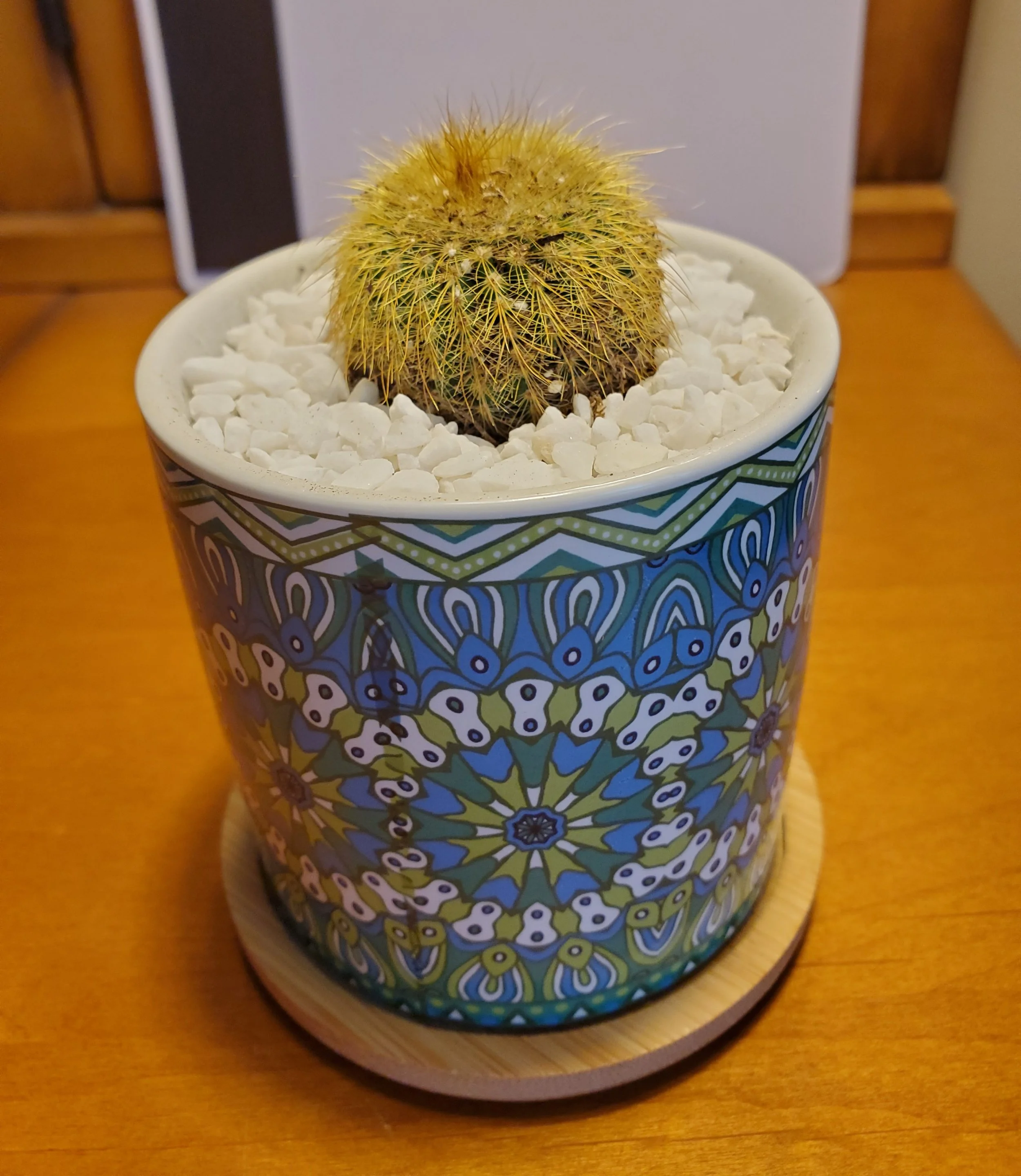
Parodia leninghausii is a South American species native to southern Brazil, thriving in rocky grasslands exposed to intense seasonal sun and fluctuating moisture levels. As it matures, it transitions from a small golden sphere to a tall cylindrical column that can reach over 18–24 inches in ideal conditions.
Below is a deep, expert-level guide that covers environmental control, root development, watering rhythms, seasonal shifts, and long-term growth management.
🌵 How Do You Care for a Parodia Cactus?
Parodia cacti need bright light, fast-draining soil, and infrequent watering. Allow the soil to dry completely between waterings and provide plenty of sunlight to encourage healthy growth and flowering.
🌵 Why Isn’t My Parodia Cactus Flowering?
If your Parodia cactus isn’t blooming, it usually comes down to a few key factors:
☀️ Not enough light — needs 4–6+ hours of strong light daily
💧 Overwatering — soil should fully dry between waterings
❄️ No dormancy — needs a cooler, drier winter rest period
🪴 Wrong pot or soil — use fast-draining mix and avoid oversized pots
🌱 Too young — some plants need time to mature before flowering
👉 Fix these conditions, and your Parodia will be much more likely to bloom.
🌞 1. Light Requirements (Expert Approach)
Parodia leninghausii is not a full-sun desert species as commonly assumed — it evolved in high-elevation grasslands with bright light but intermittent cloud cover. It requires intensity, but not scorch.
Optimal Light Strategy
Indoors:
East or Southeast window
South is acceptable only with acclimation
Grow light intensity: 30–45% (PPFD 250–350)
Outdoors:
Morning sun → partial afternoon shade
Avoid harsh, dry 2–5 PM sunlight to prevent bleaching
Symptoms of Incorrect Light
Too little light: Tall, skinny column; pale spines; elongated areoles.
Too much light: Yellowing on upper ribs, roughened epidermis, micro-sunburn spots.
Gradual acclimation is crucial — this species discolors easily before it burns.
🪴 2. Soil Composition (Collector-Level Mix)
Parodia roots appreciate even moisture with rapid airflow — a balance many growers fail to provide.
Ideal Soil Mix (Advanced Mineral Blend)
40% pumice or coarse perlite
30% cactus soil (sifted)
20% coarse sand or fine gravel
10% chipped bark or sifted orchid bark
Why bark?
This species benefits from a small amount of organic material for moisture buffering, mimicking its native grassland soils.
pH Target:
5.8–6.3 — slightly acidic, which optimizes nutrient uptake and encourages stronger spine color.
💧 3. Watering Strategy (Precision Method)
Unlike desert cacti, Parodia leninghausii enjoys regular hydration during warm months, provided drainage is excellent.
Growing Season (Spring–Summer):
Water every 7–12 days outdoors
Every 10–14 days indoors depending on pot material
Always water deeply until fully saturated
Allow soil to dry 90–100% before next watering
Dormancy (Fall–Winter):
Water every 4–6 weeks
Cooler temps require far less moisture
Avoid watering if soil remains cool to the touch
Collector Tip:
Feel the base of the plant — if it shrinks or rib spacing deepens, it’s ready for water.
🌡️ 4. Temperature & Climate Requirements
Native habitat temperatures vary significantly, so this species is adaptable — but thrives under controlled ranges.
Ideal Ranges
Growing season: 75–90°F (24–32°C)
Night temps: 55–65°F (13–18°C)
Winter rest: 40–55°F (4–13°C), dry
It tolerates short dips near 32°F only if absolutely dry.
Moisture + cold = rapid root collapse.
🌱 5. Root System Behavior & Repotting
Parodia leninghausii forms fine, hairlike roots that are sensitive to:
soil compaction
overwatering
stale, old mix
cold, wet conditions
Repotting Frequency
Every 2–3 years for young plants
Every 3–4 years once established
Choose a pot only 1–1.5 inches larger than the root mass.
Overpotting slows root activity and increases rot risk.
Best Pots
Terracotta (ideal)
Unglazed clay
Avoid tall, narrow pots — they trap moisture deep inside.
🌸 6. Flowering Behavior (Expert Notes)
Parodia leninghausii is a reliable bloomer once mature and well-lit.
Flower Requirements
A cool, dry winter rest
Age: 5–7+ years typically
PPFD above 250 in summer
Consistent hydration during growing season
It produces bright yellow daisy-like flowers from the crown in late spring through summer.
✂️ 7. Propagation Techniques (Advanced)
Seed Propagation (Recommended)
This species produces viable seeds and grows surprisingly quickly for a cactus.
Germination temp: 70–80°F
High humidity needed for first weeks
Use a purely mineral seed mix
Offsets
Rare — mature plants sometimes cluster, but not reliably.
Seed is the best propagation path.
🩺 8. Stress Signals & How to Interpret Them
Sun Stress
Pale yellow ribs on sun-facing side
Solution: filter light for 7–10 days
Dehydration
Wrinkled ribs, lightweight
Solution: deep watering + check root health
Root Decline
Plant leans, becomes loose, or base shrinks
Solution: unpot, trim dead roots, repot into fresh mineral mix
Etiolation
Thinner upper growth
Solution: increase light intensity 10–15% weekly
🛡 9. Fertilization (Balanced, Low-Nitrogen)
Parodia species respond extremely well to low-nitrogen feeding.
During active growth:
Use ¼-strength cactus fertilizer every 3–4 waterings
Ideal formula: 2-7-7 or 5-10-10
Avoid high-nitrogen mixes (they cause weak, bloated tissue)
During dormancy:
No feeding
🧭 10. Expert Seasonal Care Schedule
Spring
Increase watering
Begin fertilization
Increase sun gradually
Summer
Peak growth
Maintain strong airflow
Monitor for sun stress
Fall
Reduce watering
Stop fertilizing
Prepare for cool rest
Winter
Keep dry
Provide bright, indirect light
Maintain cooler temps