🌵 Choosing the Right Pot for Your Cactus
Picking a pot isn’t just an aesthetic decision — it directly affects how your cactus grows, how quickly the soil dries, and how resistant your plant is to rot. The right pot can boost root development, improve airflow, and reduce nearly every common beginner mistake. The wrong pot… can quietly destroy a cactus from the inside out.
Below is everything a new collector should know before choosing their next pot.
🪴 1. Drainage Is Non-Negotiable
If a pot doesn’t have a drainage hole, it’s a decoration — not a home for a cactus.
Why drainage matters:
Prevents water from pooling at the bottom
Allows oxygen to reach roots
Reduces root rot risk
Helps soil dry within a healthy 3–7 day window
Bottom line: If it doesn’t have a drainage hole, don’t use it.
If you absolutely love a decorative pot with no hole, place a plastic nursery pot inside it instead.
🟤 2. Terracotta vs. Ceramic vs. Plastic — Which Is Best?
Each material behaves differently, and your choice should match your environment and watering habits.
Terracotta (Best for Most Beginners)
Terracotta is porous, meaning it absorbs moisture and releases it through the pot walls.
Benefits:
Fastest drying time
Helps prevent overwatering
Encourages strong root growth
Great for humid climates
Best for: beginners, heavy-handed waterers, indoor growers.
Ceramic (Glazed)
Glazed ceramic retains moisture longer because the surface isn’t breathable.
Benefits:
Beautiful styles
Stable and heavy (good for tall cacti)
Slower drying in hot climates
Watch out: Water less often — soil dries slower than you think.
Plastic Pots
Lightweight, cheap, and functional, but slowest to dry.
Benefits:
Affordable
Good for large collections
Gentle on roots when repotting
Watch out: Very easy to overwater. Best paired with a gritty mix.
📏 3. Pot Size: Bigger Is NOT Better
One of the biggest mistakes new collectors make is potting a cactus into a pot that’s too large.
Why a pot that’s too big is dangerous:
Excess soil holds extra moisture
The plant drinks slowly, but the soil stays wet
Roots suffocate → rot begins at the bottom
Growth slows dramatically
The rule:
Pick a pot that is only 1–2 inches wider than the cactus itself.
This keeps the root zone tight, warm, and oxygen-rich — exactly what desert plants love.
🌬️ 4. Depth Matters Too
Different cactus shapes need different pot depths:
Globular cacti (Mammillaria, Parodia, Rebutia): shallow to medium-depth pots
Columnar cacti (Cereus, Trichocereus): deeper pots for stability
Taproot species (Ariocarpus, Ferocactus, Echinocactus): deeper pots with excellent drainage
Matching depth prevents tipping, root compaction, and moisture buildup.
🧩 5. The Connection Between Pot Shape and Growth
This is a subtle but important concept:
The pot controls the microclimate your cactus grows in.
Terracotta = airy, dry, warm roots → faster growth
Deep pots = cooler, moist lower soil → slower drying
Wide bowls = surface dries fast → great for clusters
Tall cylinders = good airflow but hold water near base
Once you understand this, you can actually shape the growth of your cactus by choosing the right pot style.
🎨 6. Aesthetic Relationship: How a Pot Completes the Plant
Choosing the right pot isn’t just practical — it’s artistic.
A good pot should:
Complement the cactus shape
Highlight its color or texture
Create balance between plant and container
Support the vibe of your collection (desert, minimal, terracotta, modern)
This is where collecting becomes personal.
It’s not just a plant — it’s a display piece.
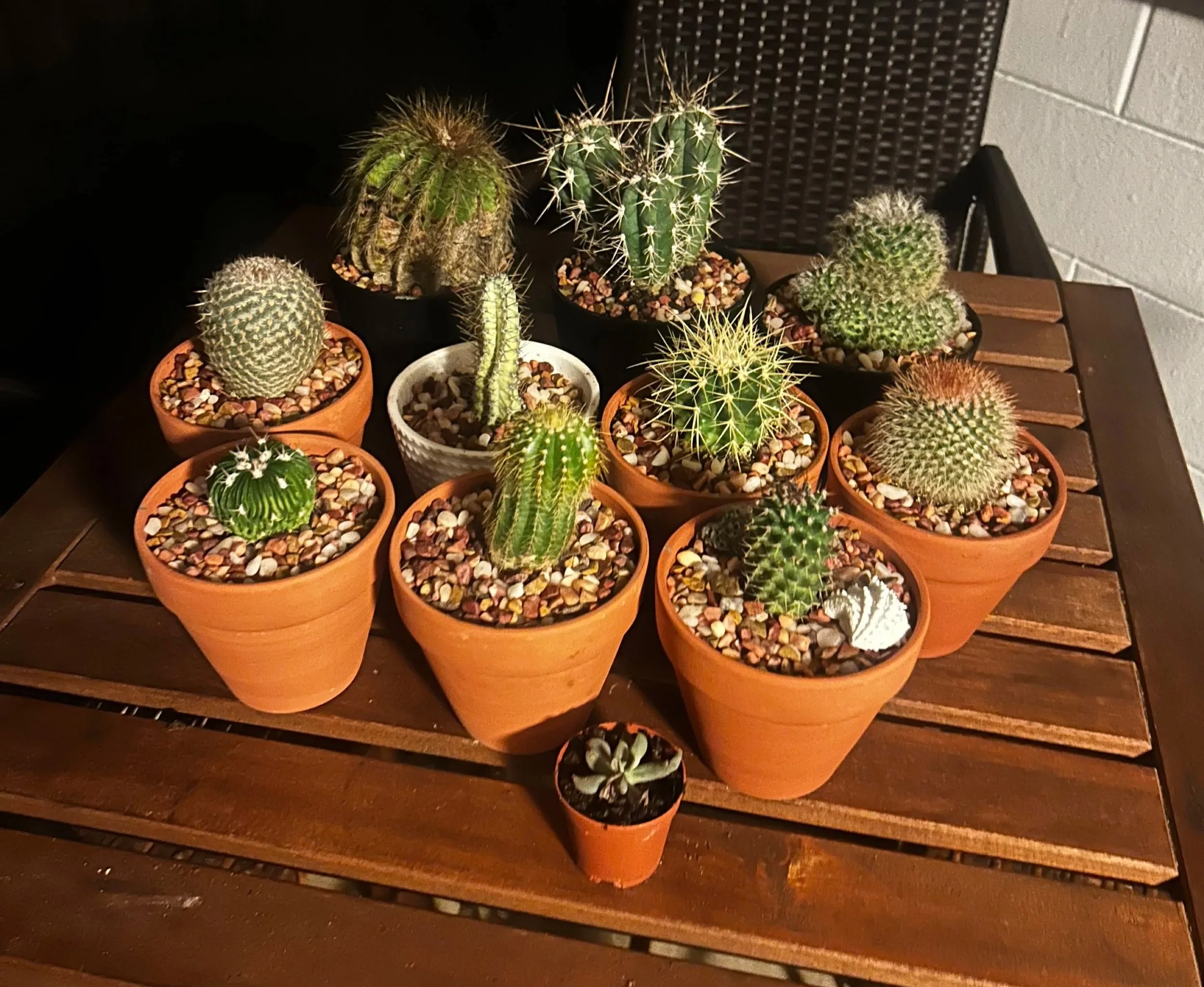
Here is a quick look at our collection, as you can see I have a multitude of pots for different reasons. I really love the classic feel of the terracotta pots with the color of the cactus, the contrast is appealing to me. But I also have some black plastic pots for some of my collection as well.
🧪 7. Potting Mix + Pot Choice Work Together
The pot you choose determines how gritty your soil should be:
Terracotta + gritty mix = perfect balance
Plastic + gritty mix = safe but slow drying
Ceramic + extra drainage layer = ideal for indoors
Your pot is half the equation.
Your soil is the other half.
When you match them correctly, your cactus becomes nearly bulletproof.
⭐ 8. Quick Beginner Checklist
Does your pot have drainage?
Is it only slightly larger than the cactus?
Is the material appropriate for your environment?
Does the pot match your watering habits?
Does it suit the plant’s shape and growth style?
If you can answer yes to all of these, you’ve chosen the right home for your cactus.